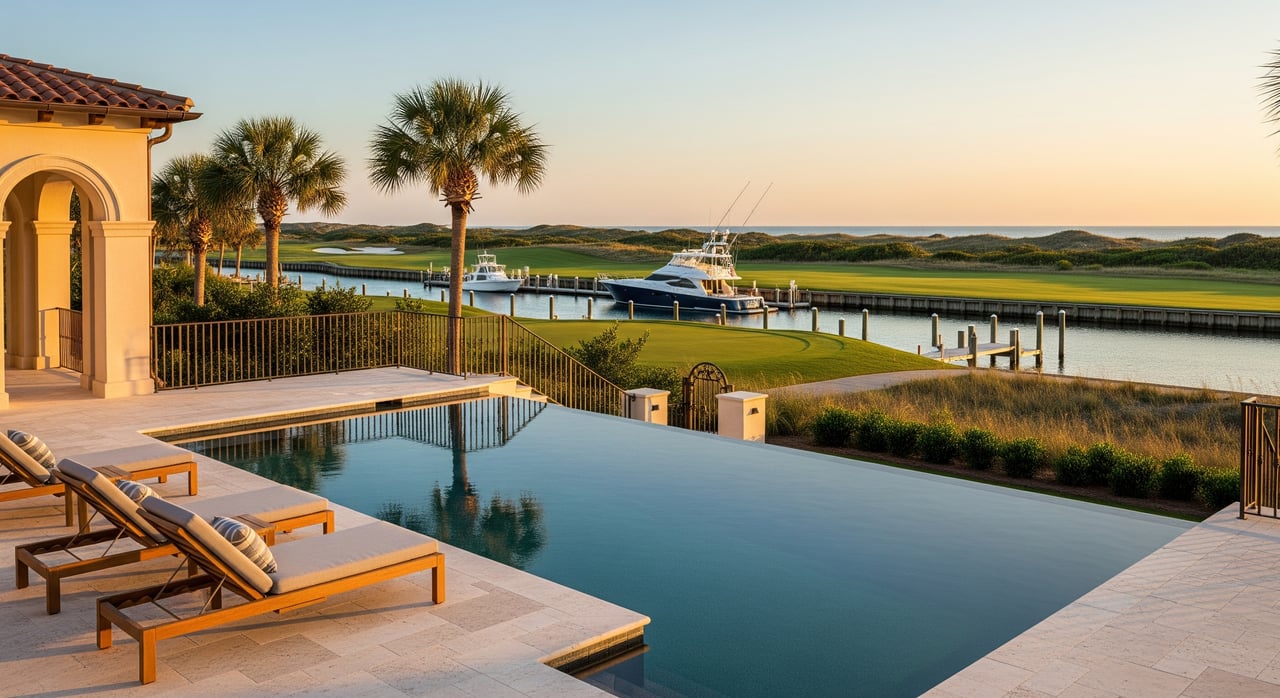
Thinking about a private oceanfront neighborhood where your days revolve around the beach, golf, and an easygoing social calendar? If you are weighing gated coastal communities, Hammock Dunes in Palm Coast, Flagler County, deserves a close look. You want clarity on amenities, access, membership costs, and how daily life actually feels before you buy. This guide walks you through the essentials, from club options and beach access to practical due diligence and a discovery‑visit plan. Let’s dive in.
What Hammock Dunes is
Hammock Dunes is an oceanfront, gated residential community on Florida’s northeast Atlantic coast in Palm Coast, Flagler County. It blends private residential neighborhoods with a private club and community associations. You will find a mix of single‑family homes, estates, villas, and condos, along with private beach walkovers for residents and club members.
Life in Hammock Dunes is shaped by a few entities. The private club manages golf, dining, fitness, and social facilities. The community association (HOA) oversees gates, common areas, covenants, and owner assessments. Condo buildings have their own associations. Club membership is typically separate from HOA ownership, and access to club facilities requires paid membership. Always confirm current structures, costs, and privileges with the club and the HOA.
Club membership and social life
The private club is the social center of the community. Typical offerings include golf memberships, clubhouse dining and bars, a fitness center with classes, resort‑style pools, tennis and pickleball, and regular social events. Expect organized activities like interest clubs, holiday gatherings, and casual mixers.
Membership types often include full golf, social, or sport categories, each with different access and pricing. Ask for the current initiation fees, monthly or annual dues, guest policies, any reciprocal club access, and minimum use or spending requirements. If membership caps or waitlists exist, ask about timelines and any priority rules.
If you are a second‑home buyer, request details on short‑term or seasonal membership options and whether full‑time residency affects access or priority. A simple way to compare is to request the latest membership schedule and a sample calendar of events from the club’s membership office.
Golf in Hammock Dunes
Golf is a major draw for many residents. When you tour, verify how many courses the club operates, whether they are private, and the design pedigree. Ask about course maintenance standards, tee‑time policies for members versus guests, and if the club hosts tournaments.
If you plan to improve your game, look for lessons, junior programs, and club fitting services. Homes along the course often enjoy scenic fairway or lake views, which can influence value and lifestyle. Some golf‑oriented neighborhoods may also have maintenance assessments tied to course proximity, so include that in your budgeting.
Beach access and coastal living
One of the standout benefits is the private beach access. Residents and club members typically use dedicated dune walkovers. Confirm which walkovers are private, whether badges or passes are required, and how guests are handled. Public beach access points along A1A are also nearby, so you can plan for both private and public options.
Coastal buyers should take a close look at long‑term shoreline planning. Ask about beach nourishment history and any upcoming projects. Review elevation certificates, check FEMA flood maps, and speak with your insurer about flood insurance requirements and costs. If you host guests often, ask the HOA about parking rules near beach access points and any guest pass procedures.
Dining, fitness, and recreation
On‑site dining at the clubhouse typically includes a restaurant and a casual grill, which serve as social hubs. Look into food service hours, seasonal schedules, and whether members can book private events. Some clubs limit nonmember dining, so clarify guest access in advance.
You can expect a well‑equipped fitness center, group classes like yoga or spin, and resort‑style pools. Courts for tennis and pickleball are common, along with clinics or social play. Many clubs also offer wellness programming, trainer consultations, and referrals for massage or therapy services, which is especially helpful for active retirees and second‑home owners.
Boating and fishing access
If boating or fishing is a priority, verify whether Hammock Dunes itself offers marina facilities or boat slips. Some coastal communities in Palm Coast do, while others rely on nearby public marinas and boat ramps in Flagler County. Ask about transient dockage, storage options, and any rules regulating boat trailers or charter pickups.
For anglers, clarify where you can fish within or near the community and the best nearby access points for the intracoastal waterway or ocean. Confirm any licensing requirements and local regulations before you go.
Everyday conveniences nearby
Daily errands are straightforward. Palm Coast’s commercial corridors, especially along Palm Coast Parkway, host grocery stores, pharmacies, and retail. You should also find landscaping, pool service, handyman services, and other home support vendors in the area. If you plan to use a property manager or caretaker for a second home, ask your agent for local recommendations.
Healthcare access matters for many buyers. Identify the nearest full‑service hospital, urgent care centers, primary care offices, and specialist providers. For peace of mind, map out drive times from Hammock Dunes to urgent care and the hospital, and confirm availability for new patients.
For families, Hammock Dunes is served by Flagler County Schools, and private or charter options may be available nearby. Use neutral, factual sources to review attendance zones and programs. Adult learners will find continuing education, community centers, and volunteer organizations in the region.
Travel is straightforward by car with A1A and I‑95 providing regional access. Jacksonville International (JAX) and Daytona Beach International (DAB) are the primary commercial airports for the area. Public transit in Palm Coast is limited, so plan for personal vehicles and rideshares.
Security and logistics are part of the appeal. Gated communities often have controlled entry, security patrols, and visitor protocols. Ask whether there is 24/7 staffing or electronic gate access, how remote guest entry works, and how deliveries are processed for packages and food. For data‑driven insight, consult official crime statistics from state and county sources.
Comparing gated coastal communities
As you compare options, focus on a few structural differences. Membership rules vary. Some communities require mandatory club membership, while others make it optional. Memberships can be tied to property transfers or kept private, which affects resale.
Consider the scale of the community and how it fits your lifestyle. Larger neighborhoods may have more amenities and events, while smaller enclaves may feel more private. Rental rules also vary widely, from short‑term friendly to long‑term only. These rules have a material impact on both lifestyle and investment potential.
Finally, look closely at long‑term coastal risk management. Review beach nourishment history, the presence of seawalls, and local resilience planning. For fair comparisons, gather the same set of documents from each community, including HOA covenants, fee schedules, budgets, and capital plans.
Buyer due diligence checklist
Use this list to streamline your research and avoid surprises.
Club and HOA
- Is club membership required for any amenities, or is it optional?
- What are the initiation fees, ongoing dues, and any special assessments for both the club and HOA?
- Are there guest rules, reciprocity agreements, or waitlists that affect access?
Property rules and use
- What do the HOA covenants and architectural controls require for exterior changes?
- Are there rental rules for short‑term or long‑term stays?
- Are there any age‑restricted areas or minimum occupancy rules you need to know?
Financial and insurance
- Review current property tax rates and ask your agent for recent comparable sales.
- Confirm flood zone status, request an elevation certificate, and price flood insurance.
- Ask about any pending community assessments or capital projects, such as dune restoration or clubhouse updates.
Physical and environmental
- What is the beach erosion history and are nourishment projects scheduled?
- How are common areas and golf courses maintained, and on what schedule?
- What is the condition and age of key infrastructure like gates, seawalls, and club facilities?
Practical access
- How are visitors, deliveries, and rideshares processed at the gate?
- What are the parking rules for owners and guests?
Resale and demand
- Who typically buys here and how does that affect demand?
- What are the average days on market and recent price trends for the community?
Plan your discovery visit
A short, structured visit will answer most of your questions and help you compare communities with confidence.
Logistics and preliminaries
- Book time with your agent, the club’s membership director, and the HOA manager.
- Request HOA bylaws and covenants, the club membership packet, recent HOA meeting minutes, and association budgets.
On‑site walkthroughs
- Tour the clubhouse, dining, fitness facilities, pools, locker rooms, and golf areas.
- Walk the beach access points and note dune conditions, signage, and any adjacent public access.
- Drive through neighborhoods at different times to observe traffic and gate operations.
Practical checks
- Test guest entry and delivery procedures at the gate.
- Ask about guest parking and short‑term rental logistics if relevant.
- Inspect common areas for landscaping quality, lighting, and general upkeep.
Local area and conveniences
- Visit the closest grocery store, pharmacy, coffee shop, and a casual restaurant to gauge daily life.
- Locate the nearest urgent care and hospital and note drive times.
- If boating matters, visit nearby marinas or ramps and ask about slip availability and transient docks.
Social and calendar
- Request a sample club calendar with weekly and seasonal events.
- If possible, plan a meal at the clubhouse to experience service and atmosphere.
Follow‑up requests
- Ask for contacts for trusted local vendors and sample utility bills or HOA dues invoices.
- Request recent comparable sales and discuss typical buyer profiles with your agent.
Work with a trusted local team
Choosing a coastal home is both a lifestyle move and a financial decision. You deserve clear answers on membership, beach access, and long‑term coastal planning before you commit. Our team supports buyers across Connecticut and Northeast Florida with design‑led advice, organized tours, and careful document review so you can compare options with confidence.
If you are considering Hammock Dunes, we can coordinate private showings, introductions to the club and HOA, and a detailed checklist tailored to your goals. Ready to take the next step? Connect with Gina McDonald to plan your discovery visit.
FAQs
How does Hammock Dunes governance work between the club and HOA?
- The private club manages amenities like golf, dining, fitness, and social events, while the HOA oversees gates, common areas, covenants, and owner assessments. Membership is typically separate from ownership.
Is club membership required to live in Hammock Dunes?
- Club membership is usually optional and separate from HOA ownership. Access to club facilities requires paid membership, so confirm current options and costs with the club.
What should second‑home buyers ask about club memberships in Hammock Dunes?
- Ask about short‑term or seasonal memberships, off‑season pricing, guest privileges, any waitlists, and whether full‑time residency affects priority or access.
How does beach access work for residents and guests in Hammock Dunes?
- Residents and members typically use private dune walkovers; confirm which are private, whether passes are required, and how guest access and parking are handled by the HOA.
What airports serve Hammock Dunes and Palm Coast?
- Jacksonville International (JAX) and Daytona Beach International (DAB) are the region’s primary commercial airports for access to Palm Coast and Hammock Dunes.
Do I need flood insurance for a home in Hammock Dunes?
- Many coastal properties require flood insurance. Check FEMA flood maps, request an elevation certificate, and consult your insurer for specific coverage and pricing.
Are short‑term rentals allowed in Hammock Dunes?
- Rental rules vary by HOA and condominium association. Review covenants and policies for minimum lease terms and guest procedures before you buy.